Is the New ‘Soft-Peg’ Algorithmic Stablecoin Resilient to 2026 Market Volatility?

Data analyst monitors soft-peg algorithmic stablecoin charts in a tech hub to gauge 2026 market volatility resilience.

Unlike traditional fiat-backed tokens, 2026 soft-peg algorithmic stablecoins utilize delta-neutral strategies and dynamic collateralization to absorb market shocks, though they remain vulnerable to liquid restaking (LRT) slashing contagion. The architecture of decentralized finance is undergoing a structural stress test, forcing a critical evaluation: Is the new soft-peg algorithmic stablecoin resilient to 2026 market volatility? Following … Read more
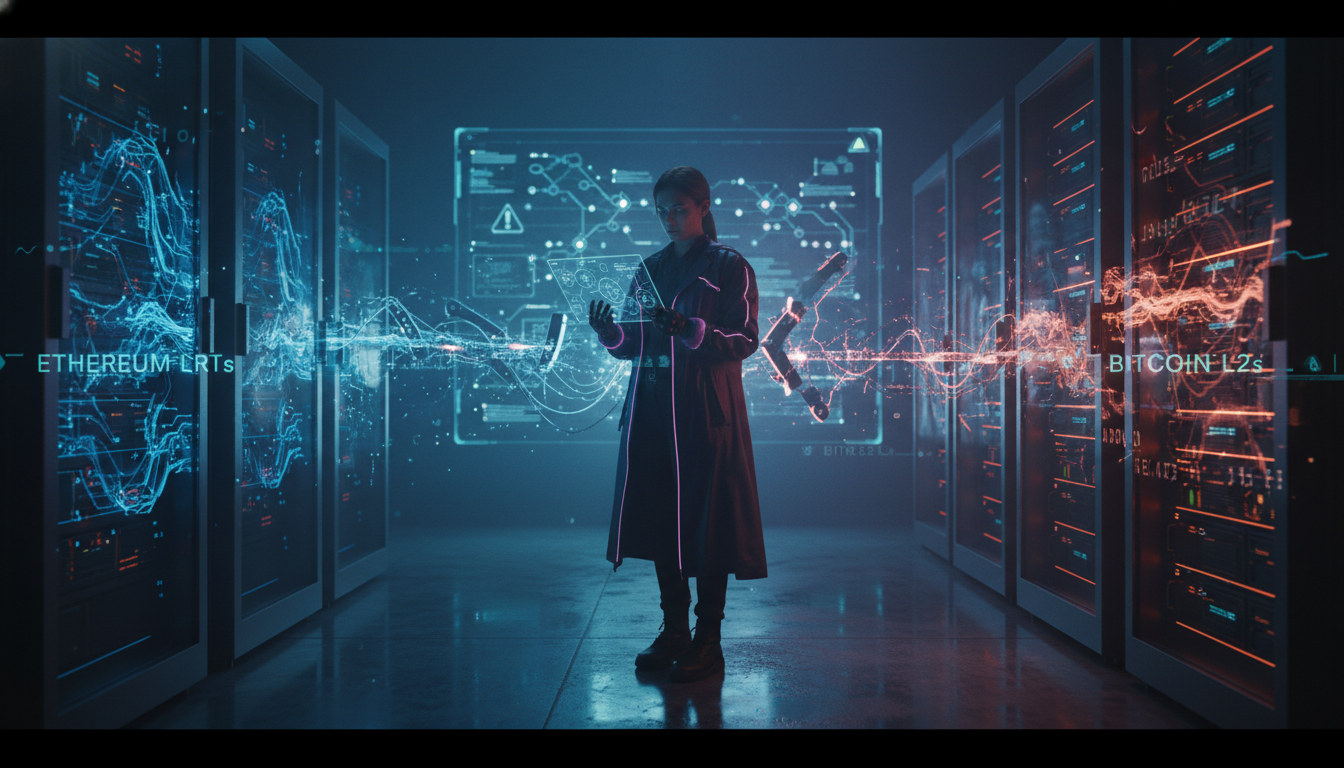

Liquid Restaking Security: Ethereum LRTs vs. Bitcoin L2s (2026)

Tech expert monitoring liquid restaking security between blue Ethereum LRTs and orange Bitcoin L2s in a data center.

While Ethereum LRTs leverage battle-tested ZK-rollups and EVM composability, Bitcoin L2 restaking via BitVM offers superior capital efficiency but introduces unique decentralized sequencer risks. Investors must weigh smart contract complexity against novel cryptographic proofs. Restaking has fundamentally altered the capital efficiency paradigms of decentralized finance, yet the primary battleground has decisively shifted from Ethereum’s monolithic … Read more

How to Participate in Farcaster SocialFi Yield Farming (2026 Expert Analysis)

Experts analyze holographic data for Farcaster SocialFi yield farming in a 2026 futuristic high-tech city office.

To participate in Farcaster SocialFi yield farming, link a funded EVM wallet to a client like Warpcast, interact with verified DeFi Frames on the Base L2 network, and route liquidity to decentralized exchanges like Aerodrome. Advanced users automate yields by running Farcaster Hubs and utilizing Neynar API webhooks to trigger smart contracts based on social … Read more

Beyond Static Tokenization: The 2026 Shift to Yield-Bearing RWA 2.0

Cyborg monitors RWA 2.0 holographic gears and a rising yield-bearing graph, illustrating the 2026 shift in tokenization.

RWA 2.0 refers to the second generation of Real World Assets on-chain, characterized by programmable, yield-bearing tokens rather than static representations of equity. Unlike RWA 1.0, which focused on simple treasury bill tokenization, RWA 2.0 integrates complex private credit, automated dividend distribution, and high composability within DeFi money markets like Aave and Morpho. The Alpha: … Read more

The End of Human Signers: 2026 Guide to AI Agent Treasuries

Digital operator managing AI agent treasuries in a 2026 cityscape, marking the end of traditional human signers.

An AI Agent Treasury is a decentralized capital pool managed not by human multisig signers, but by autonomous software agents utilizing Machine Learning models to execute on-chain transactions. By 2026, these entities utilize EIP-7702 and Account Abstraction to manage liquidity, hedge against impermanent loss, and yield farm across multi-chain ecosystems with reaction times measured in … Read more